INSIGHTS ON PHARMACEUTICAL INSPECTION
-
 Systems Presentation") Ensuring Consistent Quality In Pharmaceutical Water For Injection (WFI) Systems Presentation
Ensuring Consistent Quality In Pharmaceutical Water For Injection (WFI) Systems PresentationMaintaining high-purity water is vital for pharmaceutical production. Explore key strategies for system design, risk mitigation, and rigorous process control to ensure consistent regulatory compliance.
-
 Mastering Material Transfer: Keeping Contamination Out Of Your Cleanroom
Master the nuances of material transfer through expert-led training. Learn to assess packaging integrity, ensure complete disinfection coverage, and manage time-sensitive items with precision.
-
 A Closer Look At Multi-Lane Checkweighing In Pharma
Learn how multi-lane checkweighing boosts operational efficiency, ensures accurate dosing, and simplifies changeovers, making it ideal for applications like dual-chamber sachets and nutraceutical products.
-
 A Holistic Approach To CCI Is A Deterministic Approach
A modern approach to CCI blends smart design, risk‑based strategies, and deterministic testing to safeguard sterile products. Learn how lifecycle thinking and practical sampling plans strengthen quality.




-
Flexible Solution For Small-Series Device Assembly9/2/2026
Discover how semi-automated assembly labs streamline medical device manufacturing, ensure precise quality control, and bridge the gap from early development to high-volume production.
-
Helium Leak Detection On Glass Cartridge Containers1/5/2026
Helium leak detection offers unmatched sensitivity for verifying glass cartridge seal integrity. Learn how this advanced method outperforms traditional tests and provides confidence in packaging.
-
Collagen Based Products For Regenerative Medicine1/5/2026
Sterile packaging is vital for collagen-based regenerative medicine products. Learn how advanced integrity testing methods help prevent contamination, ensuring safety and reliability.
-
The Sensitivity Trap: Building Confidence In CCIT Performance3/2/2026
Effective CCIT goes beyond micron claims, focusing instead on repeatability, confidence, and real‑world relevance. Learn how to define a defensible LOD and understand what auditors truly prioritize.
-
Solving The Challenges Of Transdermal Patch Package Integrity1/5/2026
Ensuring transdermal patch packaging integrity is critical for safety and efficacy. See how advanced methods deliver precise, reliable leak detection, outperforming traditional approaches.
PHARMACEUTICAL INSPECTION SOLUTIONS
-

Vacuum decay testing alone doesn't guarantee regulatory-ready container closure integrity data; achieving it depends on application-specific methods, validation support, and flexible models.
-

Versatile, Reliable Inspection.
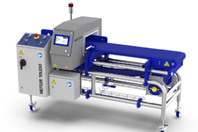
Next generation industrial metal detector delivers high sensitivity with ease of use to deliver affordable quality control. Suitable for dry or wet product inspection. -

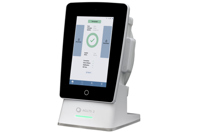
AGLTS 2 is the brand new fully automatic GMP compliant Glove Leak Tester for Pharmaceutical Isolators and RABS in the pharmaceutical industry, developed referring to the Positive Pressure Decay Method which follows the international standard ISO 14644-7 Annex E.5.
-

Explore how you can protect your brand and consumers from metal contaminants in food and pharma products using a high-sensitivity drop-through system with Multiscan technology.
-

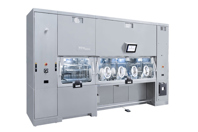
Bring together contamination control, modular flexibility, leak testing, ergonomic operation, and validation-ready automation to support safer workflows and dependable performance at scale.