
INSIGHTS ON CRITICAL ENVIRONMENTS
-
 Prefiltration And Sterilizing Filtration Of Plasma Based Products
Layered filtration reduces particles and microbes at each stage, protecting filters, improving reliability, and ensuring consistent, high-quality output.
-
 Material Transfer Into A Cleanroom: How To Reduce Contamination Risk At Every Step
Evaluate packaging integrity and master wiping techniques to prevent cleanroom contamination. Focus on surface coverage and controlled transfer paths to ensure consistent product safety and quality.
-
 And Vaporized Hydrogen Peroxide (VHP) For Isolator Decontamination") Comparing Nebulized Hydrogen Peroxide (NHP) And Vaporized Hydrogen Peroxide (VHP) For Isolator Decontamination
Comparing Nebulized Hydrogen Peroxide (NHP) And Vaporized Hydrogen Peroxide (VHP) For Isolator DecontaminationCompare Nebulized and Vaporized Hydrogen Peroxide efficacy, cycle times, and validation challenges inside pharmaceutical isolators to optimize your aseptic processing turnaround.
-
 Understanding ISO/TR 14644-21 Airborne Particle Sampling Techniques
Industry expert Mark Hallworth guides viewers through the latest ISO document (ISO 14644), exploring the reasons behind the decisions made by the team during its development.




-
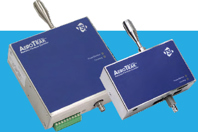
Getting Equipped For The Future With A New Microbial Air Sampler8/25/2025
Discover how a new microbial air sampler meets evolving production demands to enhance compliance, reduce errors, and streamline air monitoring in today’s digital, GMP-regulated environment.
-
Is Sustainability The Key To Agile Biopharma Manufacturing?3/18/2025
In biologics manufacturing, change is constant. Discover how new innovations and a focus on sustainability have gotten 62% of executives to prioritize eco-friendly practices, which reflects a commitment to long-term viability.
-
Innovation, Driven By Need: An Engineer's Perspective9/3/2026
Learn how repeated mechanical stress can affect fluid-transfer reliability, as well as why tubing performance is an important consideration for maintaining process continuity.
-
Lessons Learned From Containment Performance Verification Activities7/24/2026
Ensure containment performance during active powder handling. Discover how human factors and airflow dynamics influence downflow booth protection.
-
The Case For Pre-Owned Equipment In Drug Manufacturing9/8/2025
Discover how used equipment can deliver faster ROI by eliminating long lead times and reducing capital outlay, allowing for quicker production and revenue generation.
CRITICAL ENVIRONMENT SOLUTIONS
-

A widely used method to inactivate bio-contamination on surfaces in GMP controlled areas is sporicidal gassing using vaporized hydrogen peroxide (VHP). This decontamination process uses a free radical reaction to kill microorganisms on surfaces.
-

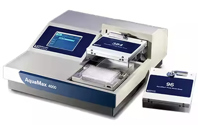
Efficient cell washing with minimal cell loss and optimal assay performance
The AquaMax® Microplate Washer is a fully self-contained system, configurable for both 96- and 384-well microplates. Use preconfigured wash, soak, and aspiration protocols or create your own multi-step protocol using the simple touchscreen interface. For biochemical assays, the washer removes unbound material and unreacted reagents.
-

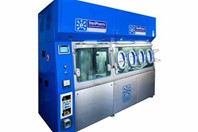
Extract Technology integrated the necessary viable and non-viable particle monitoring within the machine along with the use of a 21CFRPart 11 validated paperless (touch screen) chart recorder to enable the customer to review each stage of the cycle in full detail.
-

Research and development is the heart of life sciences innovation, which is why AES provides modular cleanroom solutions that let teams iterate freely and scale as needed.
-

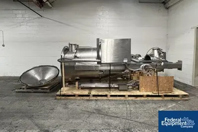
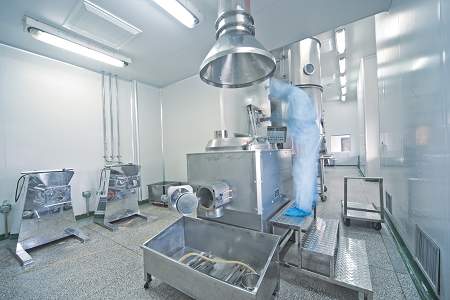
Glatt GPCG 60/30/18" Fluid Bed Dryer Granulator System with Allen Bradley PanelView 1200 Color Touch Screen Controller, Air Handler, (Qty 2) Granulation Bowls, (1ea} Wurster and Product Bowl. and System Power Distribution Control Panel. SN# 5912.

FREE CLEANING VALIDATION E-BOOK
Learn how to employ science-, risk-, and statistics-based approaches to cleaning and cleaning validation at your facility with this free, 100-page e-book, written by a global team of cleaning validation experts, pharmaceutical toxicologists, statisticians, and Six Sigma professionals.


